On the smooth surface of metal,
a woman appears — not painted, but carved.
This is chokin, a Japanese metal engraving technique.
Lines are incised directly into metal,
and shadows are created not with ink, but with depth and light.
Chokin compacts became popular during the Showa period.
Artisans engraved fine lines onto metal plates,
adding gold tones and dark patination to create contrast.
When tilted under light,
hair flows softly,
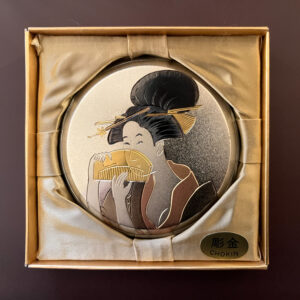
and a folding fan catches a quiet gleam.
Unlike cloisonné, lacquer, or printed decoration,
chokin relies entirely on carved lines.
Design variations include:
- Bijin-ga (beauty portraits)
- Floral and bird motifs
- Landscapes
- Kimono-clad women
- Decorative abstract patterns
Even within the same technique,
differences in carving depth and line density
create entirely different impressions.
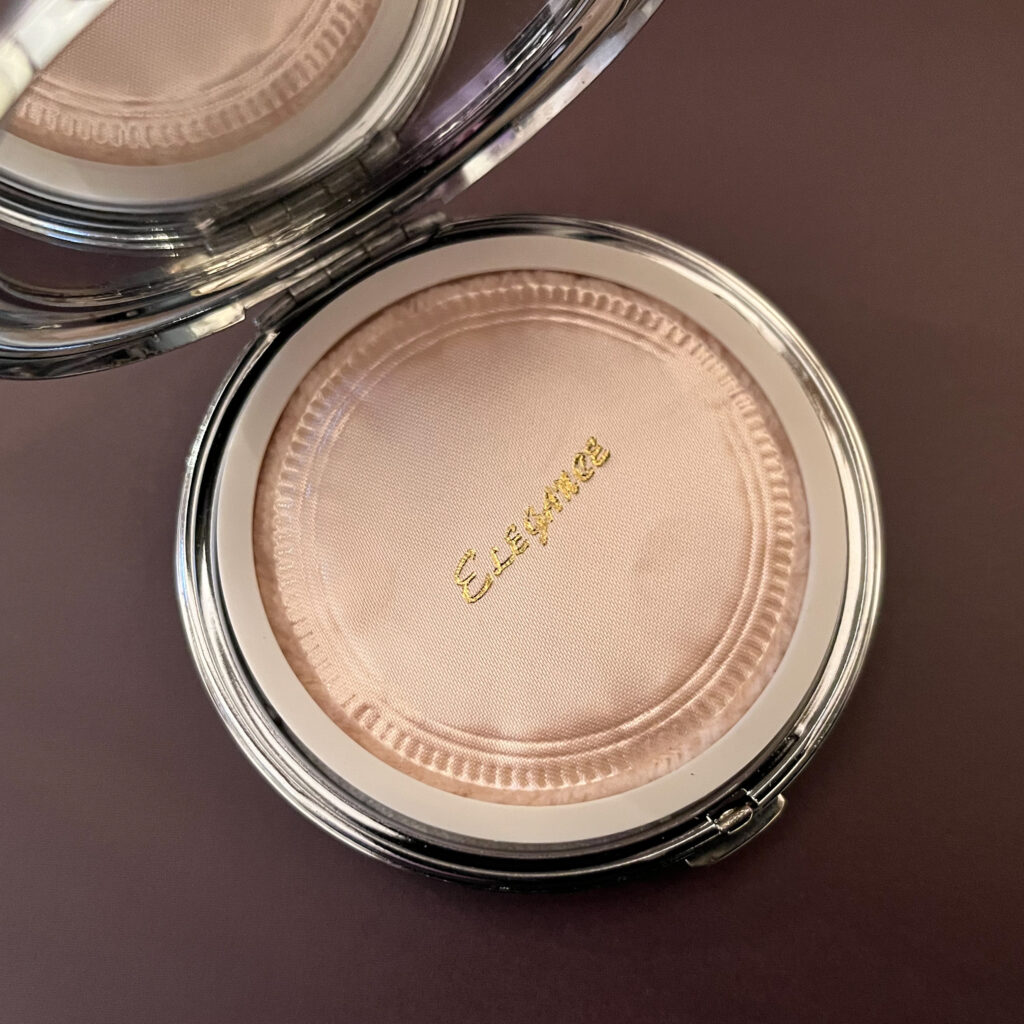
At Je et Nous Annex,
we hold multiple chokin compacts.
This article serves as the foundation
for a series exploring the variations of chokin metal art in compact form.
Why was this engraving technique chosen
for something as intimate as a compact?
We will continue to observe and reflect,
one piece at a time.