
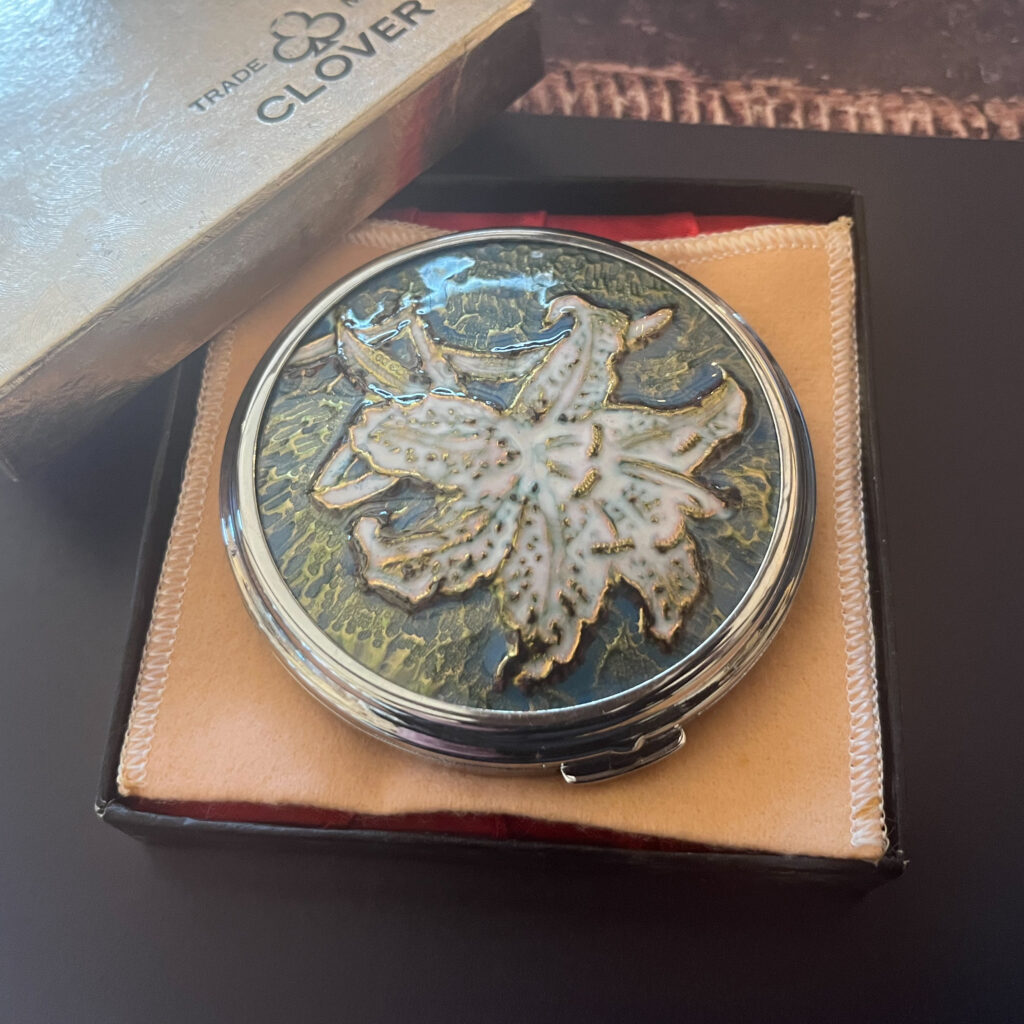
Cloisonné is often explained as a technique.
Metal, enamel, fire.
Layer after layer, fused in heat.
But when you hold it in your hand,
it feels less like a process
and more like captured light.
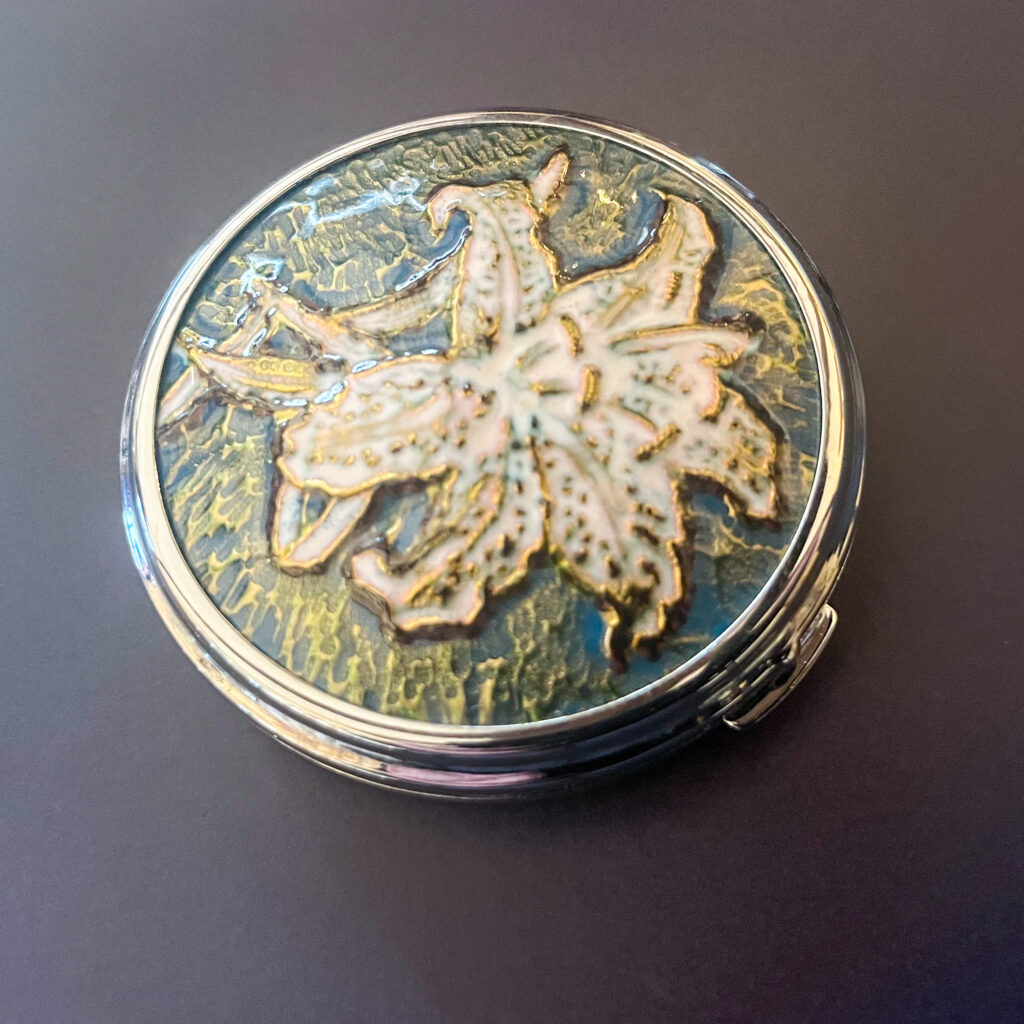
This compact carries a lily
rising softly from a deep blue-green ground.
The gold wires outline the petals,
yet the surface is not sharp.
The enamel has melted, settled,
and rounded itself in the kiln.
There is depth here.
Not just color,
but movement beneath the glass —
subtle shifts where light gathers and slips away.
Inside, the mark reads “CLOVER.”
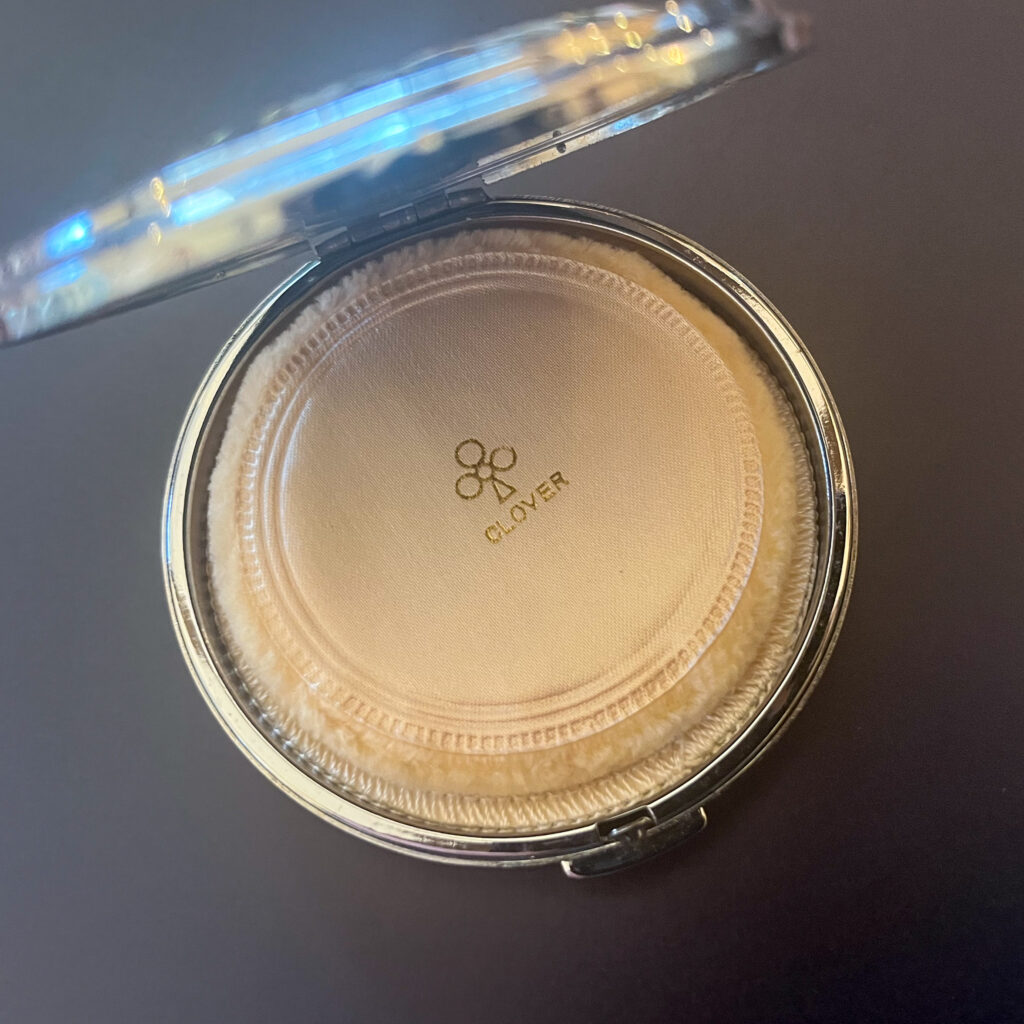
A registered trade name, carefully stamped.
Even in objects produced in number,
there was a certain pride in authorship.
During the mid-Shōwa period,
cloisonné was admired —
given as gifts, sent abroad,
representing technical skill and refinement.
Yet what remains most striking today
is not prestige.
It is the quiet way
metal and glass —
two hard materials —
appear almost gentle in the palm.
That softness is where cloisonné lives.
コメントを残す